
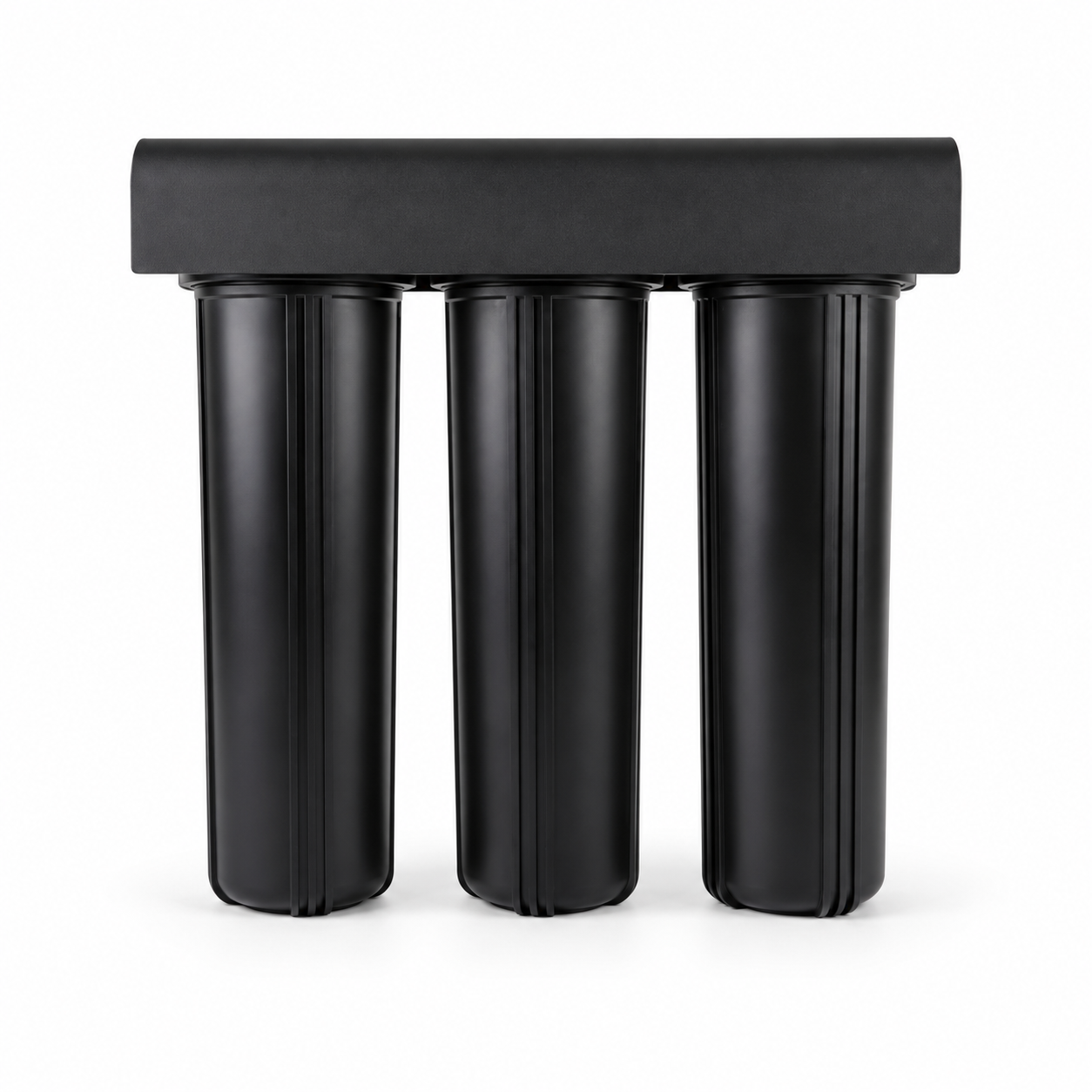
Our Whole House Triple Filter includes the black three housing assembly and standard mains water cartridge kit (2045-VP-FK), with a nominal 0.5 micron rating. This configuration is for mains water.
A whole house water filtration system is designed to treat water as it enters the property, before it reaches multiple taps and fixtures. Instead of focusing on one drinking tap only, this style of system supports water used throughout the home, including kitchens, bathrooms, laundries and outdoor areas. That makes it a useful option for households that want a broader filtration setup rather than a single point drinking water solution.
The question many people ask is simple: what does it actually do? In plain terms, a whole house filter is installed near the water entry point and the incoming water passes through staged filter housings before moving further into the property. The exact results depend on the filter media, local water conditions and maintenance, but the purpose is to improve the quality of water used across the home.
Why families choose whole house filtration
For many homes, the advantage is convenience. You do not need to think only about the kitchen tap because the filtration process supports a wider range of daily water uses. Showers, bathroom basins, washing machines and kitchen taps can all benefit from a point of entry approach. This is especially appealing for families who want a consistent filtration solution and prefer not to manage separate small filters around the house.
Whole house systems can also be a practical choice for larger households where water is used constantly during the day. If several people are showering, cooking, washing clothes and filling bottles, a central system can make more sense than only filtering water at one outlet.
Common benefits customers look for
- Cleaner water supplied to multiple areas of the home.
- A single central filtration setup rather than several small units.
- Support for bathrooms, kitchens, laundries and outdoor taps.
- A neat wall mounted system with visible filter housings.
- A stronger option for families who want more than drinking water filtration.
Installation considerations
A whole house system is usually more involved than an under sink drinking water filter. The best location needs to be considered carefully, and the pipework must be suitable for the unit. Space, wall strength, drainage access, pressure, weather exposure and ongoing maintenance access can all affect the final installation location.
Because the system connects to the main water supply, installation by a licensed plumber is commonly recommended. A plumber can inspect the property, check the best position, install the system securely and help make sure the unit is placed where future filter changes are practical. This is especially important in Sydney homes where plumbing layouts can vary significantly between houses, townhouses and renovated properties.
Product only or supplied with installation?
Some customers are ready to purchase the product only because they already have a plumber. Others prefer help arranging a supply and installation package. Both options can work well. The best choice depends on your confidence, your property and whether you want one team to help with the filtration system and the installation pathway.
AE Water Filters is based in Sydney, supplies Australia wide and can help match the right system to your home. If you want a broader filtration option for your family rather than only one filtered drinking tap, the whole house system is a strong place to start. It is practical, scalable and suited to households that want cleaner, higher quality water available across more of the home.
Maintenance and household expectations
One important point is that whole house filtration should be treated as an active part of the home, not something that is fitted once and forgotten. Filters need to be replaced when required, and the system should stay accessible so servicing is simple. A clear installation position makes this easier for the homeowner and for any plumber who attends the property later.
It is also useful to have realistic expectations. A whole house system supports the water supply across the property, while a reverse osmosis system focuses on drinking water at one tap. Some families choose one option, while others use both for a more complete approach. The right answer depends on water goals, budget, plumbing access and how the household uses water each day.